


Field methods
Every sample in the Rocky Mountain Snowpack dataset starts as fieldwork in the Colorado backcountry. The collection protocol is designed so that samples are comparable across sites and seasons: captured in chronological series, tied to site metadata, and relatable to weather and geographic conditions after the fact.
Snowpit excavation
Collection begins with a standard snow-science pit: a vertical wall cut to expose the season's stratigraphy. The pit wall gives each session its structural context — layer boundaries, hardness transitions, and the depth ordering that the per-sample imagery hangs off of.
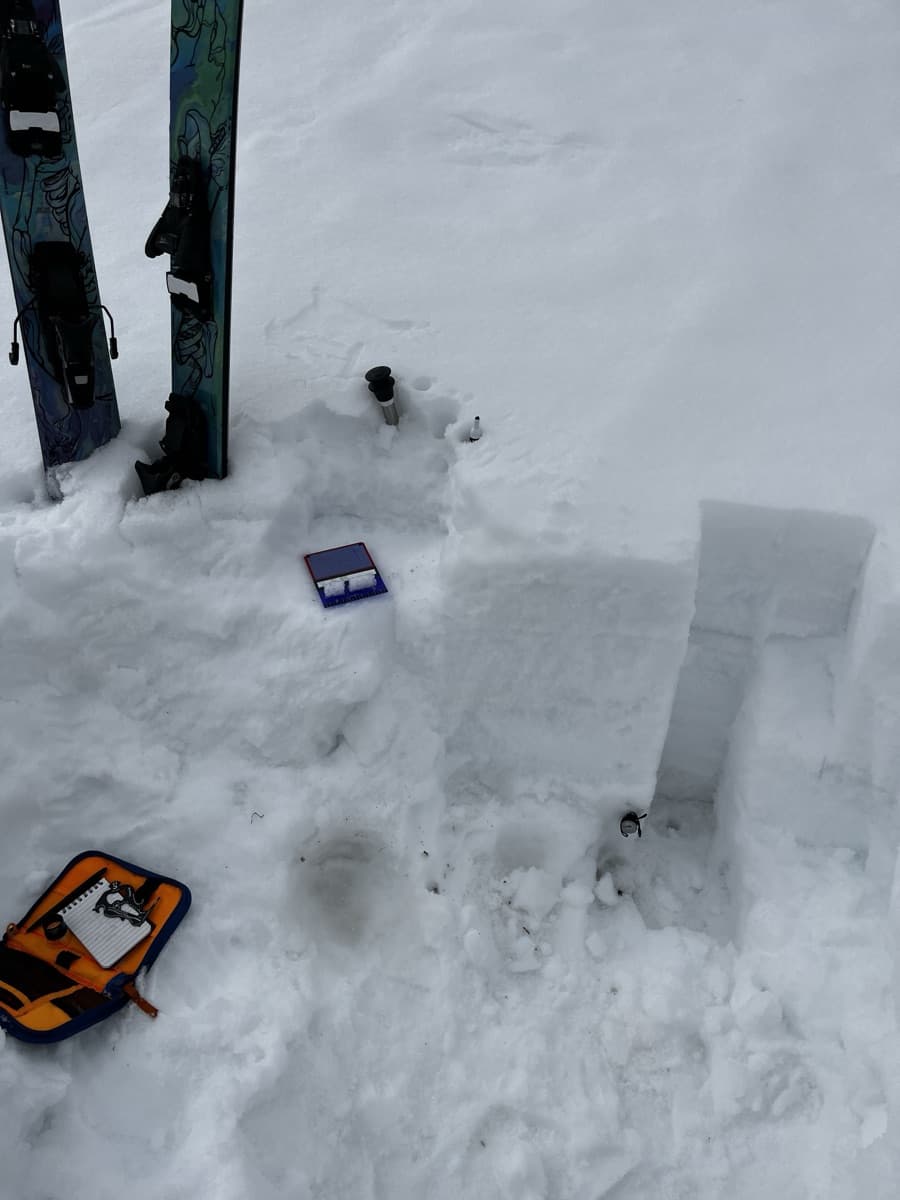
The mini-coring method
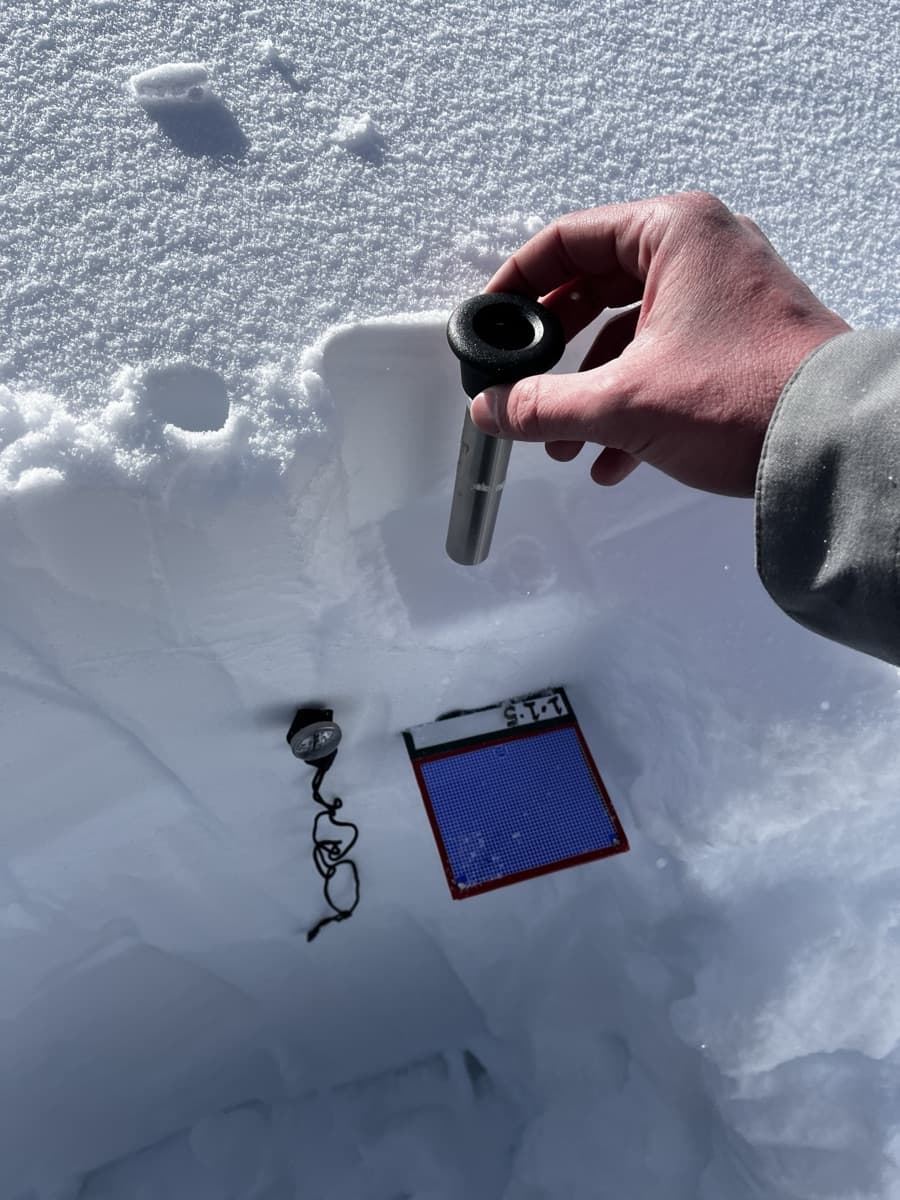
Cores are extracted with a novel mini-coring method developed by our founder: a small-diameter corer drawn through the pit wall produces an intact cross-section of the layers it passes through, small enough to photograph in a controlled frame and fast enough to sample repeatedly down the wall. Mini-coring is what makes dense, chronologically ordered sampling practical in the field — the property that distinguishes this dataset.
Crystal cards & magnified profiles
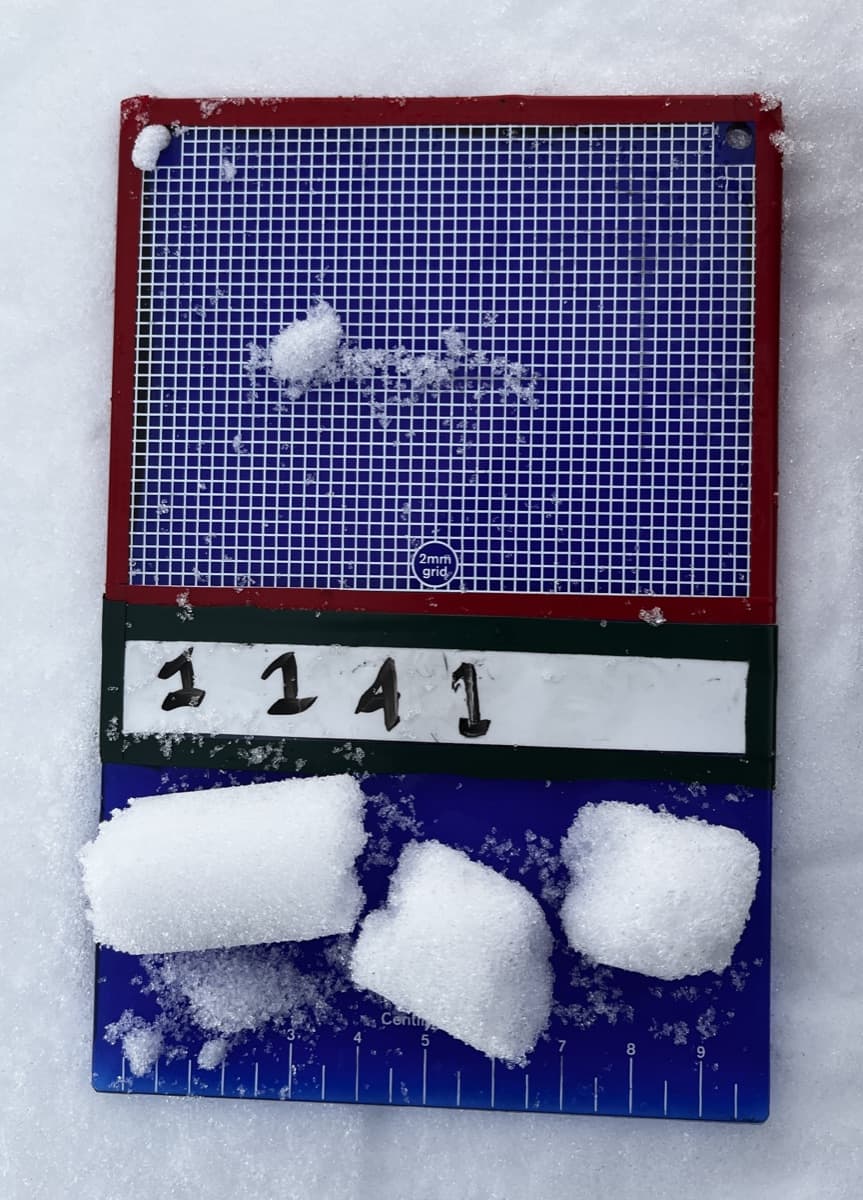
Extracted samples are staged on a gridded crystal card— the blue reference surface in these photos — which fixes scale and background so images are comparable across sessions. Each sample is photographed twice: the core cross-section in full, and the crystal structure under magnification through a field loupe. The two views become the dataset's two imaging modalities (core and magnified profile), each labeled with its sequence number and session metadata.
From data to avalanche-risk research — in general terms
Our modeling approach builds up in stages. Generative models over each imaging modality (the open-source snowGAN family) force the networks to internalize real snowpack structure. On top of that representation work, our avalanche-risk research line (AvAI — Avalanche AI) studies how snowpack imagery relates to risk when combined with weather timeseries and site conditions. We keep the specifics general here on purpose while the research is competitive and unpublished; the models we do release are open source, and the dataset itself is open for anyone to explore. This work is research in progress — it is not part of the AvAI app today, and when it first ships it will be clearly labeled as a research preview.
Questions
Methodology questions, collaboration, or field-protocol details for research purposes: support@rmdig.ai.